
FRAMEWORK //
GRAPH THEORY & MATHEMATICAL INTEGRITY
Authority Score Explained: Mathematical Integrity
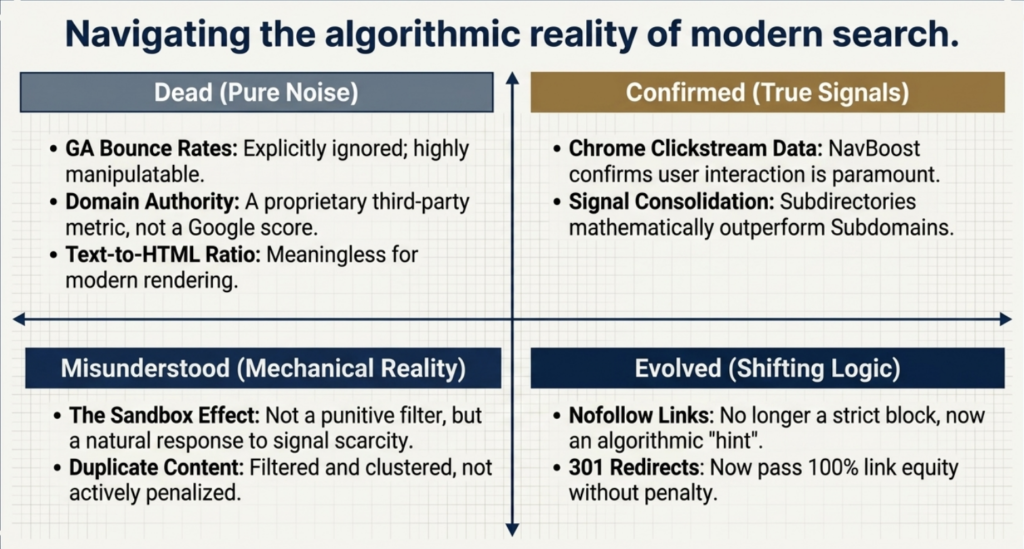
1. The Deception of Legacy SEO Metric Manipulation
For years, the ecosystem has relied on third-party metrics to evaluate digital performance. Scores like Domain Authority are calculated via superficial backlink counts, ignoring the semantic context, node truth, and actual user pathways. This structural blindness allows bad actors to manipulate ratings using automated link-networks, resulting in high authority numbers that deliver absolutely zero organic revenue.
These legacy metrics fail because they treat the web as a flat list of links. Modern search networks, however, operate on multi-layered knowledge graphs. Chasing artificial link scores is an inefficient use of capital that leaves your digital architecture completely vulnerable to algorithmic correction.
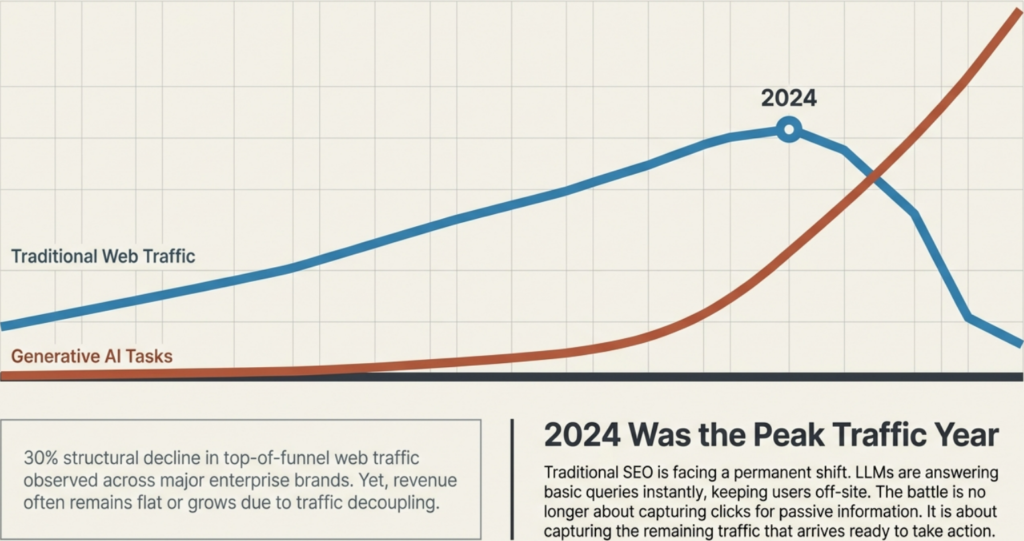
2. Mapped Topology vs. Superficial Backlinks
Earning true authority requires structural validation, not a high volume of generic hyperlinks. The searchneedsLOVE engine calculates a node’s strength by testing its semantic alignment against explicit knowledge anchors.
Topological Density: We analyze how closely your digital asset aligns with verified seed nodes of authority within your industry.
Node Resistance: Our algorithms simulate user and crawler navigation to ensure your platform minimizes semantic friction, forcing search graphs to map your subdirectory as the definitive, immutable source of truth.
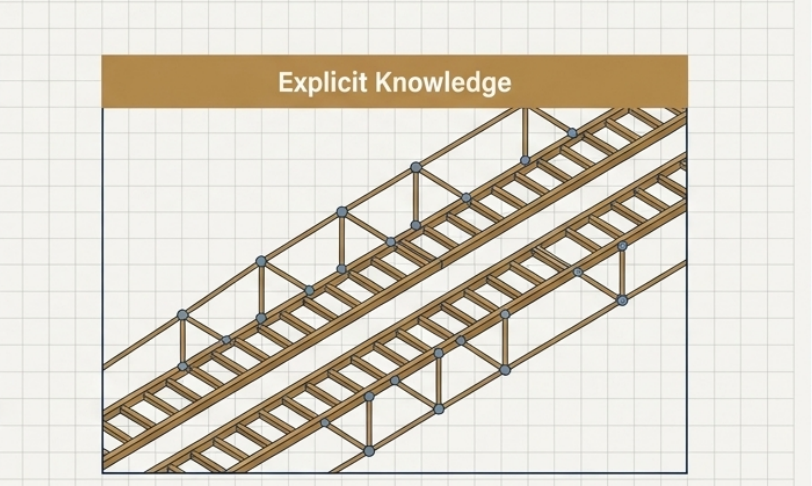
3. Graph Integration and Algorithmic Proof
True authority is a binary state: either your platform is natively integrated into the search network’s knowledge base, or it is treated as temporary noise. By optimizing for explicit relational nodes through relationLOVE, your platform stops trying to trick the algorithm. Instead, you become part of the mathematical skeleton that the algorithm relies on to validate information, rendering third-party authority scores completely irrelevant.

4. Engineering Unmanipulable Enterprise Equity
By replacing speculative marketing metrics with strict mathematical integrity, searchneedsLOVE provides corporate platforms with absolute clarity. You no longer report on vanity numbers to your stakeholders. You build an unmanipulable, verifiable digital asset whose authority is confirmed daily by the cold, unyielding physics of graph mathematics.
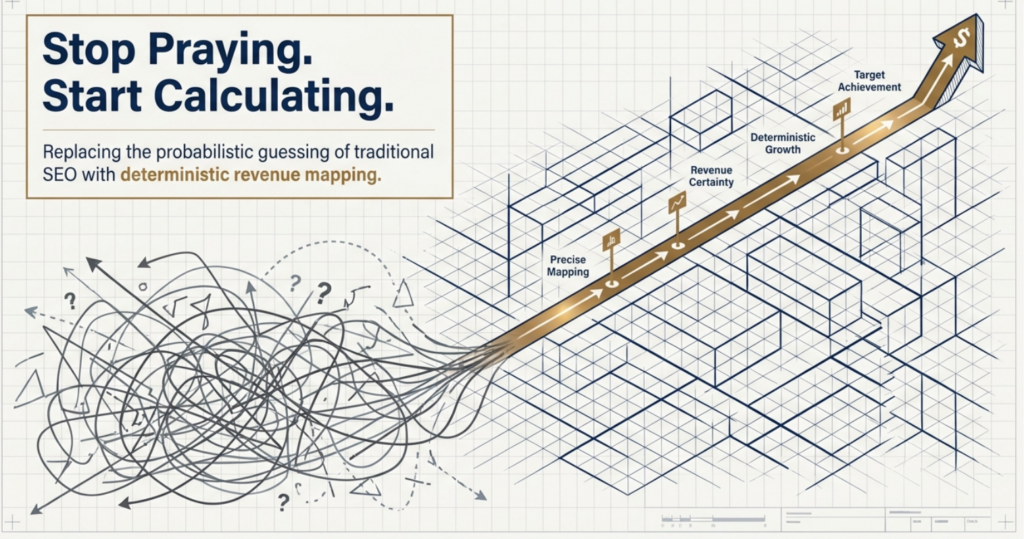
📐 GRAPH INTEGRATION PROTOCOL //
ZERO NOISE DOCTRINE
Domain Authority is an external third-party approximation. True authority is a mathematical function of eigenvector centrality and semantic proximity within the core network graph. If a node lacks verifiable data-integrity, it is filtered out by core updates regardless of its backlink volume.
Architecting Permanent Digital Revenue.
Immediate live deployment. Annual corporate terms apply.
Deep Dive
Framework Article
- Search Architect
The financial architecture of traffic assets.