
FRAMEWORK //
LINEAR ATTRIBUTION FALLACY
How We Define the Modern User Journey
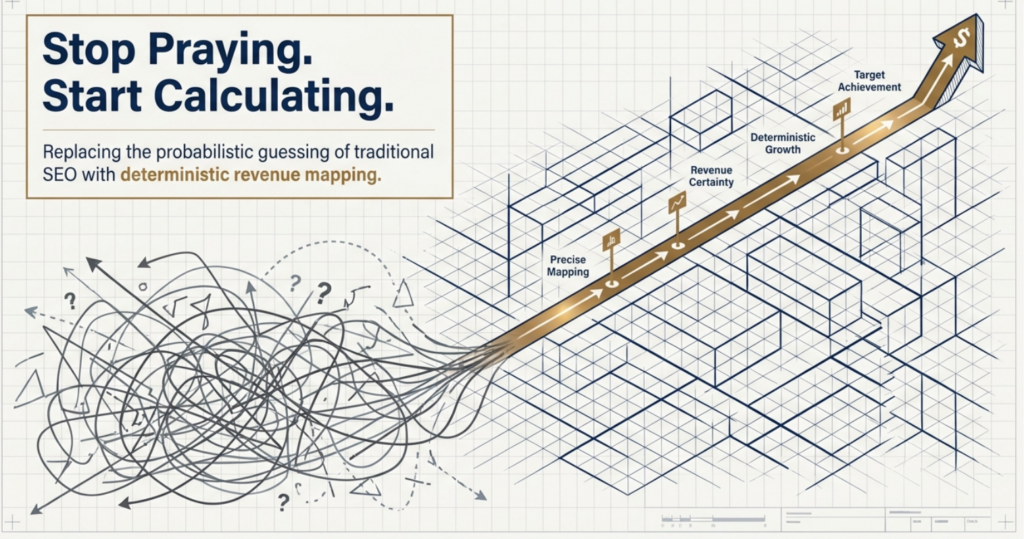
1. The Breakdown of First-Click and Last-Click Attribution
Modern consumer behavior defies simple timelines. A premium enterprise buyer does not see an ad, read one article, and convert. They bounce between comparative evaluations, peer validations, and deep entity research over days or weeks.
Assigning the commercial value of this complex journey to just the first touchpoint or the final click is a fundamental engineering failure. It causes brands to over-fund top-of-funnel noise or over-bid on brand keywords, while completely starving the critical decision phases where the deal is actually won or lost.
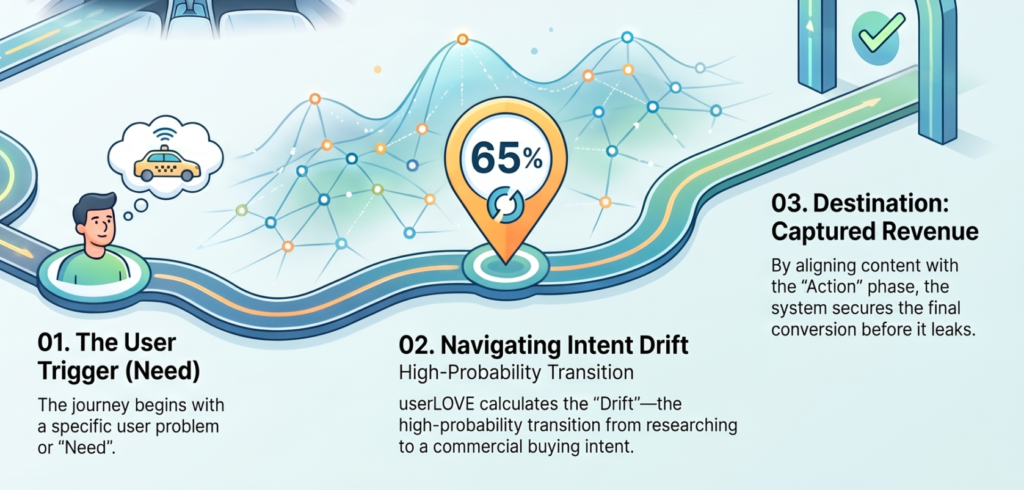
2. Deterministic Navigation through Semantic
Instead of watching the user journey unfold passively, searchneedsLOVE acts as an active vector force. Every digital asset deployed via our infrastructure possesses a calculated “semantic gravity.”
As a prospect moves through their evaluation loops, our system dynamically detects changes in their vector direction. By projecting the highest-integrity facts and structural trust components exactly when the buyer’s criteria shift, we shorten the decision path. We do not try to guess what the user wants next; we structure the digital horizon so that moving toward your asset becomes the path of least resistance.
3. Eliminating the Trust Gaps in Real-Time
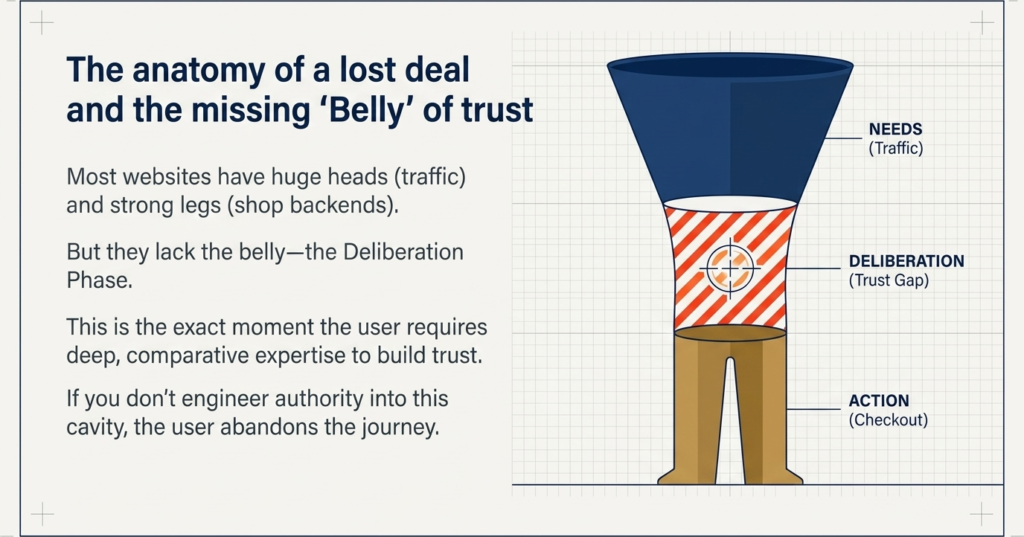
A user journey breaks down when there is a mismatch between the buyer’s current cognitive need and the structural component provided on the page. If a buyer pivots into risk evaluation and you present them with basic informational content, they exit the funnel. Our engine maps these gaps before they happen, engineering structural certainty directly into the journey’s architecture.
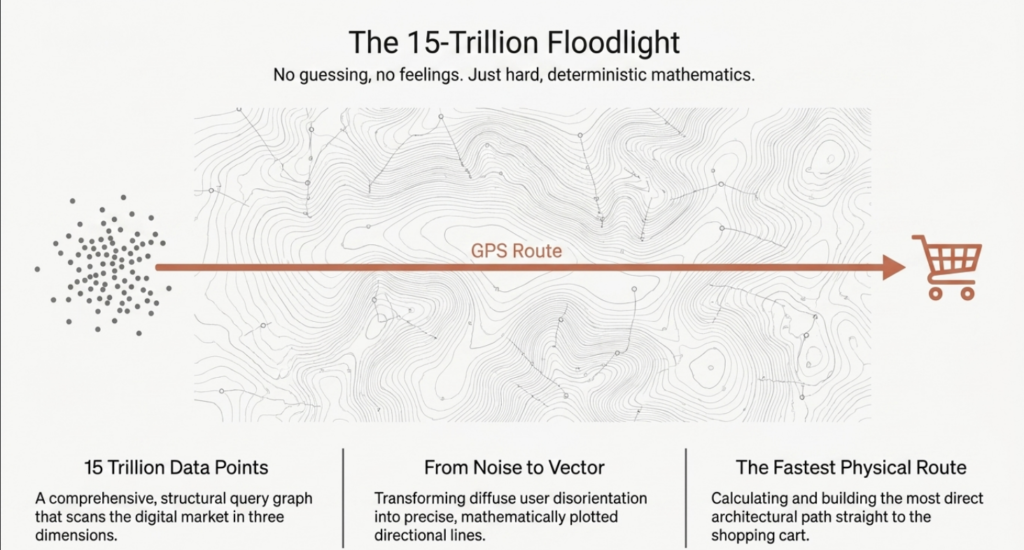
4. Building a Predictable Revenue Machine
Moving away from erratic click attribution to active journey engineering provides corporate enterprises with predictable revenue streams. You no longer hope that a user accidentally stumbles across your checkout page. You build an integrated digital highway that actively pulls high-value prospects out of market doubt and into permanent transaction cycles.

searchneedsLOVE //
GUIDING REVENUE TRAJECTORIES
To dissect the exact cognitive loop that occurs inside these evaluation phases, proceed to our framework analysis on Decoding the Messy Middle or consult your Technical Director.
Architecting Permanent Digital Revenue.
Immediate live deployment. Annual corporate terms apply.
Deep Dive
Framework Article
- Search Architect
The financial architecture of traffic assets.